
Aging Barriers and Endothelial Senescence
How Does Endothelial Senescence Modulate Organ Interfaces in Aging and Disease?
Endothelial cells (ECs) form highly specialized, selective barriers between organs and the vascular system and are essential for maintaining physiological processes and protecting organs from harmful influences. These barriers allow the controlled exchange of substances, ensuring that only specific molecules can reach the organs. With increasing age and in the course of diseases—particularly as a result of cellular senescence, which is an irreversible arrest of the cell cycle caused by internal or external damage—these complex barriers can become dysfunctional. So far, little is known about how senescence directly affects the function and integrity of endothelial barriers such as the blood-brain barrier (BBB) and peripheral blood vessels. The aim of this interdisciplinary research project is therefore to systematically investigate the consequences of senescence on endothelial barriers in the context of aging processes and diseases such as dementia. The approach combines innovative in vitro BBB models, derived from human induced pluripotent stem cells (iPSCs) of donors with different ages and health backgrounds, with in vivo animal models that allow for the analysis of age- and senescence-associated changes in the peripheral vascular system. Particular attention is paid to the role of sialic acids as key a molecule in the regulation of barrier function, along with specific transmigration experiments to evaluate the integrity of these barriers. In parallel, blood samples from cohorts of patients with neurodegenerative diseases are analyzed for senescence-associated biomarkers, aiming to identify new diagnostic markers and therapeutic approaches. This multidisciplinary project draws on the combined expertise of medicine and life sciences at Martin Luther University Halle-Wittenberg, with the long-term goal of establishing a sustainable translational research network on cellular senescence and endothelial barriers funded by third parties.
Projektbeschreibungen
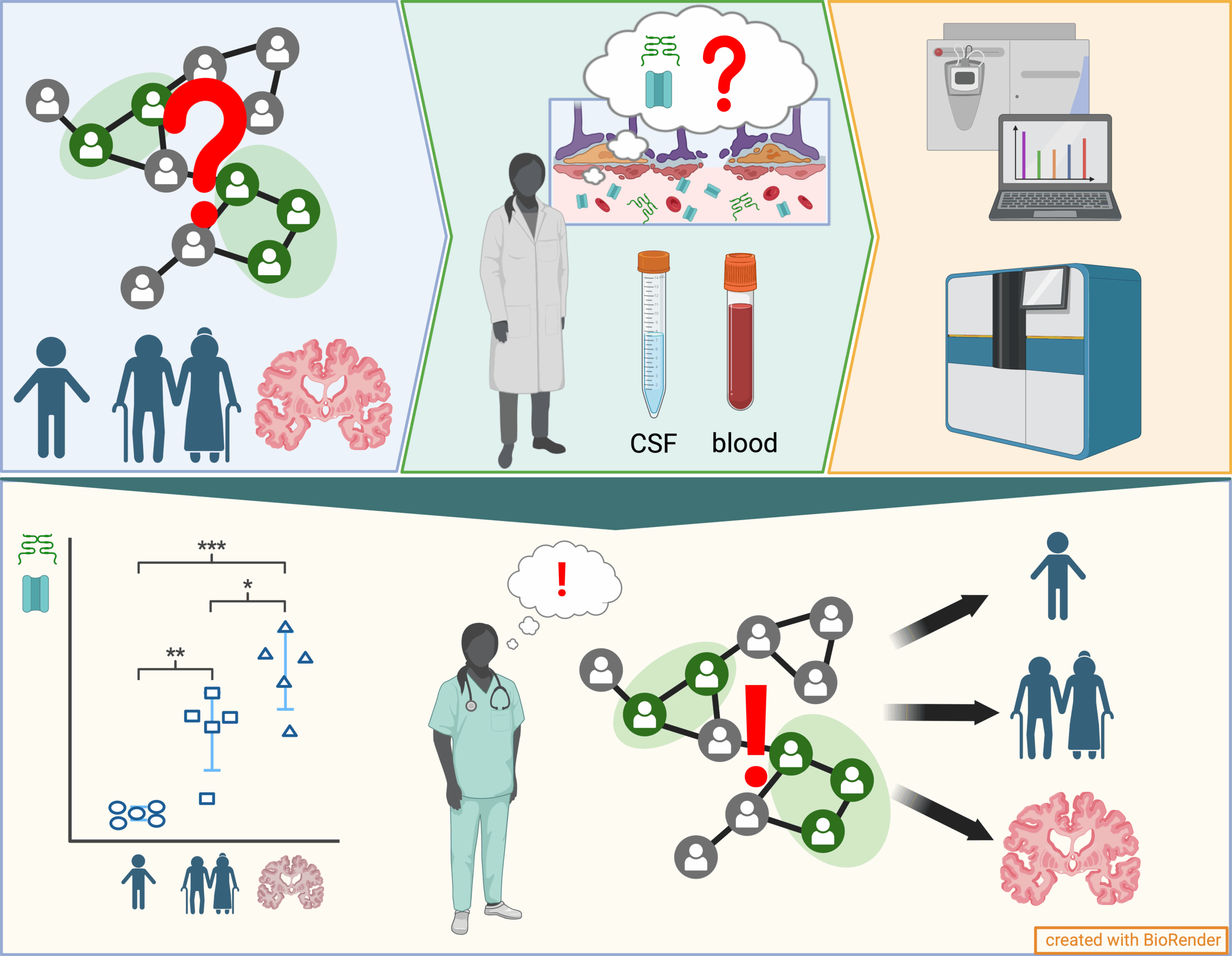
The SP1 project is centered on the identification and validation of protein biomarkers for senescence and changes in the barrier function of the blood-brain barrier in cerebrospinal fluid (CSF) and blood from an aging cohort and from patients with neurodegenerative diseases. The analysis will encompass a total of over 2,000 samples. The samples necessary for this study are obtained from existing biomedical material banks. The initial step in this process is the thorough characterization and harmonization of the study cohort. To this end, the cohort will also be harmonized with regard to established markers of neurodegenerative processes and correlated with clinical data. Furthermore, specific potential markers for the integrity of the blood-brain barrier will be identified and validated from the available sample material using modern analytical methods such as SIMOA (Single Molecule Array, digital immunoassay platform) and targeted mass spectrometry (MRM). The data analysis integrates both cross-sectional and longitudinal data to capture dynamics in the course of neurodegenerative diseases. The final stage of the process involves the integration and testing of the most promising candidates for their clinical utility. This is achieved by merging extensive clinical and biochemical data. The results of this study should ultimately lead to new criteria for risk stratification, follow-up, and targeted therapy monitoring. Consequently, the project establishes a foundation for novel diagnostic approaches and aims to identify specific senescence markers as predictive and prognostic instruments for neurodegenerative diseases.
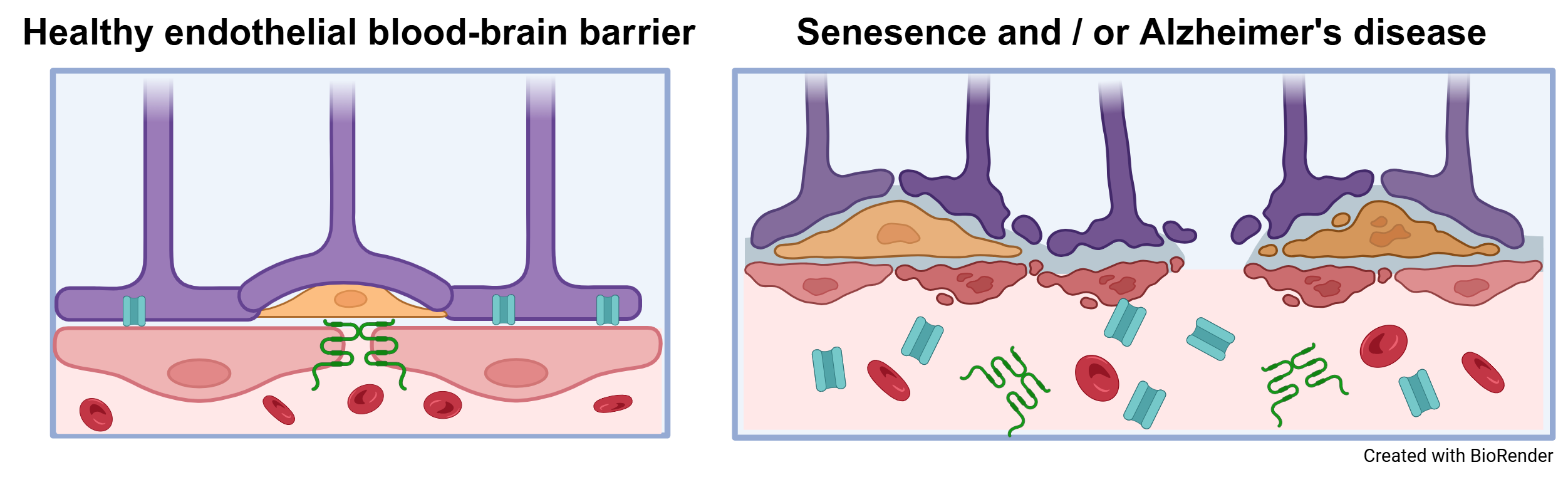
SP2 investigates the mechanisms of cellular senescence at the blood-brain barrier (BBB) using state-of-the-art human induced pluripotent stem cell (iPSC) models. These iPSCs, derived from young donors, healthy elderly individuals, and neurological patients, are differentiated into brain-relevant cell types including endothelial cells, astrocytes, pericytes, and microglia. Researchers screen for diverse senescence markers through proteomics, immunofluorescence, western blotting, and flow cytometry under both monoculture and co-culture conditions and in three-dimensional organoid systems. Experimental paradigms involve aging induction by oxidative stress or metabolic perturbation, as well as intervention with senolytic drugs such as metformin and rapamycin. The effects of senescent endothelial cells—both their molecular secretions and released exosomes—on other components of the neurovascular unit are assessed in detail. Data integration with other projects enables correlation between in vitro phenotypes and clinical markers. The aim is not only to unravel the cellular pathways driving BBB senescence in aging and neurodegeneration but also to identify druggable targets to delay or reverse pathological processes. By broadening knowledge of cell-to-cell communication and microenvironmental changes, SP2 contributes foundational insights for translational approaches to maintain brain barrier function and combat age-related neurological diseases.
SP3 focuses on a comprehensive analysis of genetic and functional changes that occur in blood vessels as they age, using both mouse and human models. Central to the project are transcriptome analyses across different time points in male and female mice from multiple strains and ages (3–24 months, including C57BL/6 and DBA/2), under both baseline and stress conditions such as RAAS activation. Primary human endothelial cells (HUVECs) are included, with comparisons between young and senescent cells under normal and stress-induced (e.g., replicative or RAAS-stimulated) environments. Integrative gene enrichment and pathway analyses identify targets relevant for vascular aging and senescence. These candidate genes and pathways are evaluated in vitro for their impact on core processes such as proliferation, migration, metabolism, cell death, autophagy, and barrier function, using molecular techniques like inhibitors, siRNA, and CRISPR-Cas. A key objective is to functionally link these pathways to blood-brain barrier (BBB) integrity, in collaboration with SP2, and to validate findings against clinical biomarker data from SP1. The project also explores molecular responses by sex and genetic background, helping to understand individual risk factors in aging. Together, these approaches create opportunities for developing targeted interventions to preserve vascular and BBB function and prevent disease progression in aging populations.
SP4 investigates how sialic acid (Neu5Ac) influence cellular senescence and barrier properties of the blood-brain barrier (BBB). The project focuses on an immortalized human brain endothelial cell line (THBMECs; Stins et al., 2001), which can be used to build up a highly simplified model of the blood-brain-barrier. Further, one of the key enzymes of sialic acid biosynthesis will be knocked out in this cell line, thus creating a platform for the targeted manipulation of sialic acid levels in cells. After the cells were exposed to various stress factors, sialic acid content, as well as barrier permeability and adhesion probability will be determined. The comparison of the presumably normosialylated THBMEC wild-type cells with the presumably hyposialylated THBMEC knockout cells is of particular importance – especially when considering the stress response of both cell lines. Furthermore, supplementation trials with sialic acid and their precursors are being conducted to determine whether lost barrier properties or accelerated aging can be reversed. Results from these in vitro models are aligned with findings in other subprojects (e.g., SP1–SP3) to ensure physiological relevance. Altogether, SP4 provides new indications for manipulating glycan pathways to stabilize endothelial barriers in aging or disease and offers a scientific basis for future glycan-targeted interventions that could preserve BBB function in elderly individuals.
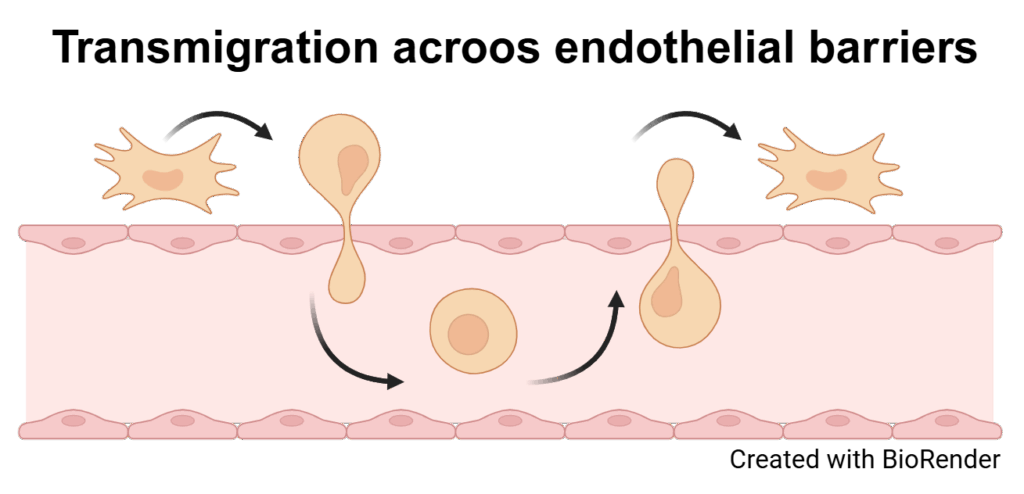
SP5 examines how aging and cellular senescence influence the ability of mesenchymal stem cells (MSCs) to migrate across endothelial barriers, using in vitro models with primary cells from young, old, and APOE knockout rabbits. The project establishes transmigration assays where rabbit and human endothelial cells—differentiated to mimic blood-brain barrier (BBB) and peripheral vascular barriers—are exposed to MSCs from various backgrounds. Researchers quantitatively evaluate MSC transmigration efficiency and analyze senescence markers in both the endothelial and migrating stem cells, comparing effects between age groups and genotypes. These assays are extended to endothelial cells from non-cerebral organs, enabling a broad analysis of barrier properties in different tissues. The study investigates whether aging in the MSCs themselves or in the endothelial barrier is the main limitation for successful transmigration, also considering the APOE genotype and metabolic changes. In addition to migration, the functional status of MSCs after crossing the barrier is assessed to understand changes in their reparative potential in aged environments. By identifying mechanisms behind impaired cell migration and tissue repair with age, SP5 aims to provide a scientific basis for enhancing regenerative therapies and vascular function in elderly individuals and patients with age-associated dysfunction.
People
Dr. rer. nat.
Matthias Jung
Sprecher & SP 2 – PI
Physiologische Chemie, UMH
Dr. med.
Annemarie Thäle
SP 1 – PI
Neurologie, UMH
Dr. troph.
Juliane-Susanne Jung
SP 5 – PI
Anatomie & Zellbiologie, UMH
Prof. Dr. med.
Markus Otto
SP 1 – Co-PI
Neurologie, UMH
Dr. rer. nat.
Kaya Bork
SP 4 – Co-PI
Physiologische Chemie, UMH
Prof. Dr. nat.
Thomas Hollemann
SP 2 – Co-PI
Physiologische Chemie, UMH
Prof. Dr. med. Dr. rer. nat.
Claudia Grossmann
SP 3 – PI
Julius-Bernstein-Institut, UMH
Dr. rer. nat.
Astrid Gesper
SP 4 – PI
Physiologische Chemie, UMH